
Yoga Beyond the Algorithm: Returning to Lineage and Relationship
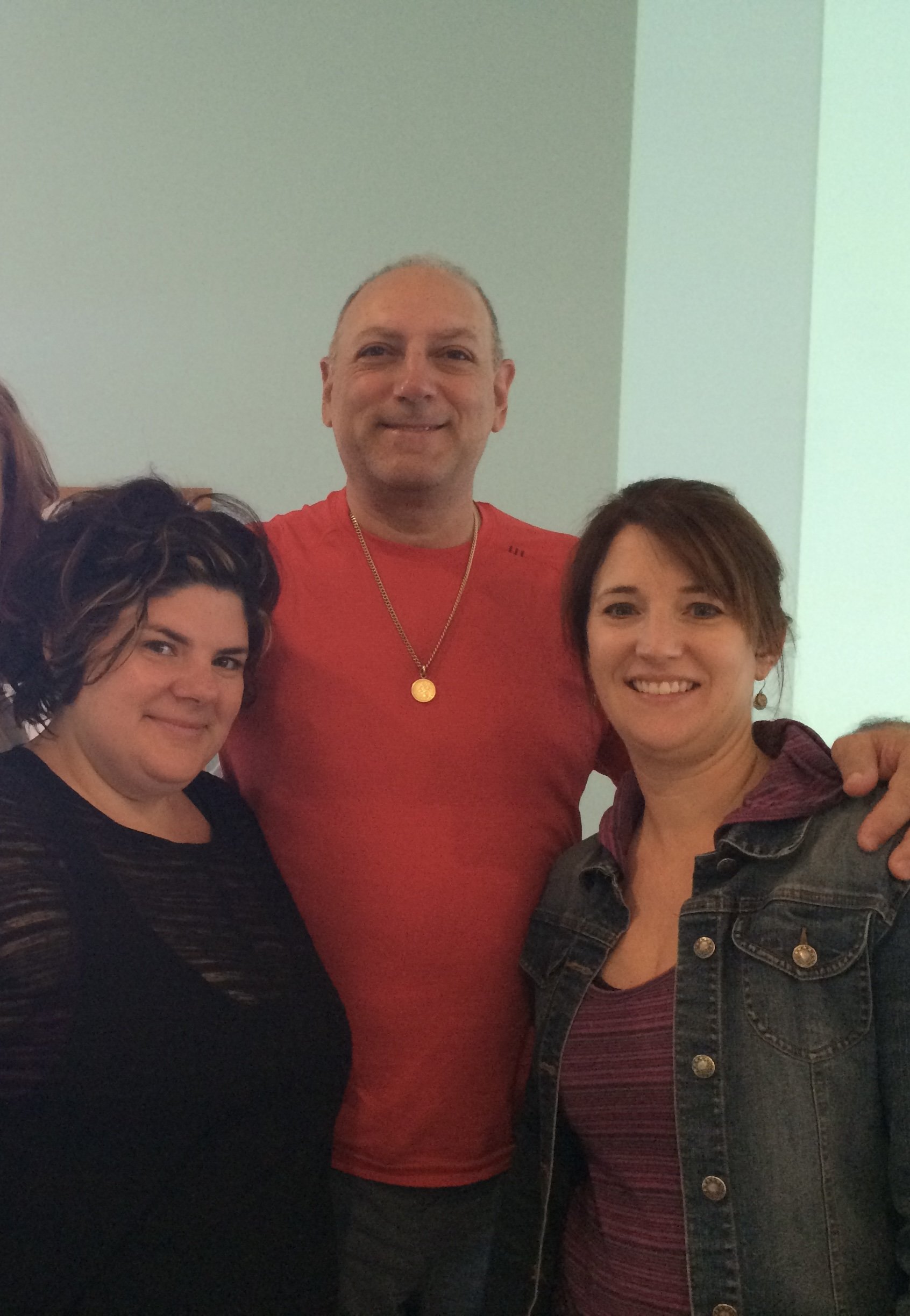
Me with Leslie Kaminoff in 2016
Recently, I read a blog post by a teacher I’ve studied both anatomy and breathing with, Leslie Kaminoff, titled “The #1 Yoga Book on Amazon is an AI Fraud”. While the article raises important questions about authenticity in the age of artificial intelligence, what stayed with me wasn’t really about AI itself. It was what the situation reveals about where yoga culture finds itself today, and how far we’ve drifted from the roots of lineage, mentorship, and lived, embodied experience.
I’ve been teaching yoga long enough to remember a very different landscape. There were no streaming platforms for yoga classes, no social media feeds filled with short clips of practices, no Amazon marketplace overflowing with yoga books, trainings, and philosophies packaged for mass consumption. If you wanted to study yoga, you had to find a teacher and commit to learning with them over time. It was slower, more relational, and in many ways more grounded.
Students stayed with teachers for years, sometimes decades. Teachers studied closely with their own mentors, often in long-term apprenticeships or sustained relationships that shaped not only what they taught, but how they lived. Knowledge wasn’t simply collected or consumed; it was transmitted through relationship, repetition, and direct experience. There was context for what was being taught, and there was accountability to something larger than personal interpretation or branding.
You knew who your teacher studied with. You knew what tradition or lineage informed their practice. Yoga was not something separated from its roots or repackaged endlessly for different audiences. It was part of a living, breathing lineage that carried both responsibility and reverence.
As yoga has grown into a global, mainstream practice, there is no question that something beautiful has happened. Accessibility has expanded in ways that would have been unimaginable a few decades ago. People who may never have entered a studio now have access to practices that support their nervous system, their breath, their bodies, and their sense of connection to themselves. That matters deeply, and it has changed lives.
At the same time, something has been diluted. In the expansion and commercialization of yoga, it has become increasingly common for practitioners to step into teaching without ever having spent significant time in a long-term mentorship with an experienced teacher. It is now possible to complete a training, gather enough information to guide a class, and begin teaching without necessarily having been shaped by years of sustained study, philosophical inquiry, or deep embodied practice.
This isn’t about gatekeeping yoga or suggesting that only a select few should teach. Rather, it’s about recognizing that depth matters. When yoga is separated from lineage and long-term mentorship, something essential is often lost: the nuance that comes only from experience, from being corrected over time, from watching how a teacher carries their practice not just on the mat, but in life.
A lineage is not about hierarchy or exclusivity. At its best, it is about transmission. It is about teachings that have been tested, refined, questioned, and embodied over time, passed from teacher to student in a way that preserves both integrity and evolution. Without that continuity, yoga can easily become reduced to technique, fitness, or aesthetic expression, rather than a path of inquiry and transformation.
For this reason, I think it is increasingly important for students to know who they are learning from. What is their teacher’s training background? Who did they study with? Are they continuing to learn from more experienced teachers? Are they engaged in ongoing study, or is their teaching primarily based on a single training or surface-level exposure? These questions are not about judgment, but about discernment.
Over the years, my own relationship to yoga has continually deepened my respect for how vast these teachings are. The longer I practice and study, the more I realize how little I actually “know”. Consistent practice has a way of replacing certainty with humility. It invites us into a long-term relationship with something that cannot be fully mastered or packaged.
One of the concerns I have about the modern yoga landscape is not change itself, but the loss of reverence that can come with speed and scale. When yoga becomes something consumed quickly, through snippets, certifications, or trend-driven interpretations, it risks losing the depth that makes it transformative in the first place. There is a difference between information and transmission, between knowing about yoga and being shaped by it over time.
Yoga has always evolved, and it will continue to evolve. But evolution without roots can become disorienting. The deeper the expansion, the more important it becomes to stay connected to the ground it grows from.
In a world that values speed, convenience, and constant output, perhaps one of the most meaningful practices we can return to is simply this: staying in relationship with our teachers, with our lineages, and with our own ongoing process of learning. Not as something we complete, but as something we remain in for a lifetime.